Inside Shiatsu: What Really Happens When a Thumb Presses a Point
A look at how shiatsu pressure on specific points and meridian lines triggers nervous system, muscle, and energy responses in the body.
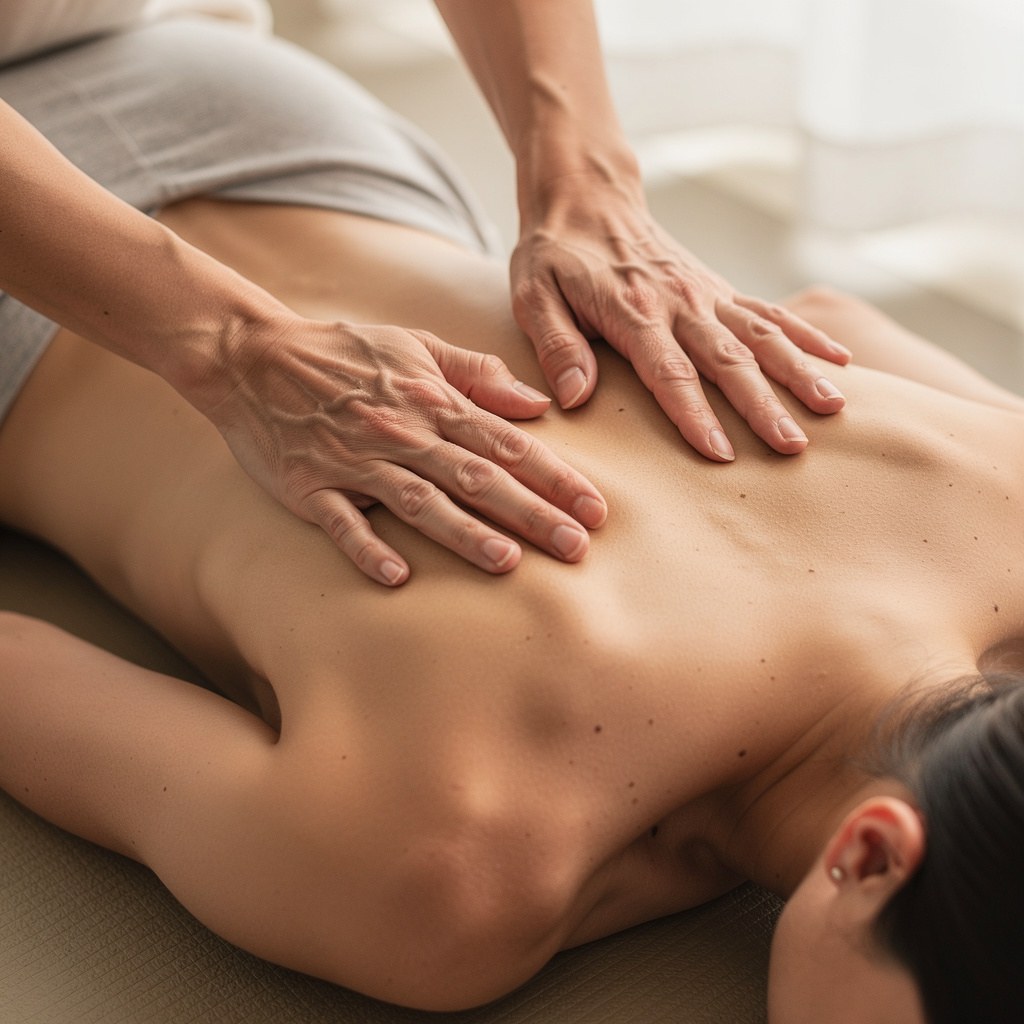
A shiatsu session rarely starts with talk about energy. It starts with a hand resting on your shoulder, then a slow, steady push that spreads through your whole arm. Ten seconds later the practitioner moves an inch lower and does it again. That rhythm — press, hold, release, shift — is the entire method in miniature.
The Meridian Map Behind the Pressure
Shiatsu borrows its body map from traditional Chinese medicine: twelve main meridians, each linked to an organ system, running from the fingertips or toes up through the torso and head. Along these lines sit points, or tsubo, where practitioners believe energy, called ki, can get stuck or run too fast.
A point on the hand between the thumb and index finger, known as Hegu or LI4, sits on the Large Intestine meridian and is used for headaches and jaw tension. A point on the lower leg, Zusanji or ST36, belongs to the Stomach meridian and shows up in almost every session focused on digestion or general fatigue.
The practitioner doesn't press randomly. They follow the meridian line with their palm first, feeling for spots that feel tighter, colder, or more tender than the surrounding tissue, then settle on specific points along that path.
What a Pressing Thumb Actually Triggers
When a thumb holds steady pressure on a point for three to seven seconds, several things happen almost immediately. Local blood vessels dilate, which is why the skin often flushes pink right where contact was made. Nerve endings in the skin and muscle send signals up the spinal cord, and the brain responds by lowering the tone of the surrounding muscle fibers.
This is the mechanical layer that most bodywork shares, not something unique to shiatsu. What shiatsu adds is sequence and rhythm: pressure is applied in waves, matched to the client's own breathing, so the body relaxes into each push instead of bracing against it.
After repeated pressure along the same meridian, practitioners often notice the whole line softening, not just the single point they started with. That spreading effect is one reason sessions work through entire limbs or the full length of the back rather than isolated spots.
From Nervous System to Fascia
Underneath the skin, meridians roughly correspond to lines of connective tissue, or fascia, that wrap around muscles and organs. Sustained pressure on a tight patch of fascia can release adhesions that built up from old injuries, repetitive movement, or simply sitting at a desk for years.
A stiff neck that traces back to a shoulder injury from five years ago often responds better to pressure on a point in the forearm than to direct massage of the neck itself, because the fascia connecting those areas pulls tension along its length. This is where the meridian model and modern fascia research tend to overlap, even though they come from different centuries and different explanations.
The nervous system also plays a role in pain perception during a session. Firm pressure on one point can dull sensitivity in a completely different area of the body, a phenomenon connected to how the spinal cord processes competing signals.
Why Point Selection Changes the Outcome
Two clients with the same complaint — say, lower back pain — can leave a shiatsu session having received completely different point sequences. One might get pressure along the Bladder meridian running down the outer spine, while another gets work on the Kidney meridian points near the inner ankle, because their overall pattern of tension, digestion, and sleep pointed the practitioner in a different direction.
This is why shiatsu resists being reduced to a fixed protocol. The practitioner reads pulse quality, skin temperature, and muscle tone at the start of each session and adjusts the point map accordingly, rather than repeating an identical routine every time.
A typical full-body session runs forty-five minutes to an hour, moving from feet to head or the reverse, with extra time spent wherever the body signals the most resistance. People often report feeling warm, loose, and unusually sleepy for the rest of the day, which practitioners read as the nervous system settling into a lower gear after the pressure work.
Regular sessions, spaced a week or two apart, tend to produce more noticeable shifts in chronic tension than a single visit, since each session builds on the loosening from the last one.